
A durable, leak-free CPVC pipe installation requires careful attention to detail, especially when applying CPVC solvent cement. CPVC (chlorinated polyvinyl chloride) is a thermoplastic known for high temperature and chemical resistance, which is why it’s widely used in hot-water supply systems, fire sprinklers, and some industrial applications. But even a strong material can fail if the solvent-welded joints aren’t made correctly.
Unlike adhesives that simply “glue” parts together, solvent cement softens and fuses the pipe and fitting surfaces into one continuous piece of plastic. That chemical weld is what makes the connection strong and watertight—so missing a step, using the wrong product, or rushing the process can lead to weak joints, leaks, and expensive callbacks.
For a complete, step-by-step overview of solvent welding across PVC, CPVC, and ABS, start with our Complete Guide to Solvent Cementing.
In this blog, we’ll focus specifically on CPVC solvent welding mistakes and how to avoid them, plus straightforward best practices you can use on the next job.
Mistake #1: Using the Wrong Cement
CPVC and PVC cements are not interchangeable. CPVC requires a cement formulated for its specific chemical makeup. Using PVC cement on CPVC will not form a proper chemical bond and can lead to leaks or failures over time.
Best Practices:
- Always make sure the label confirms CPVC compatibility.
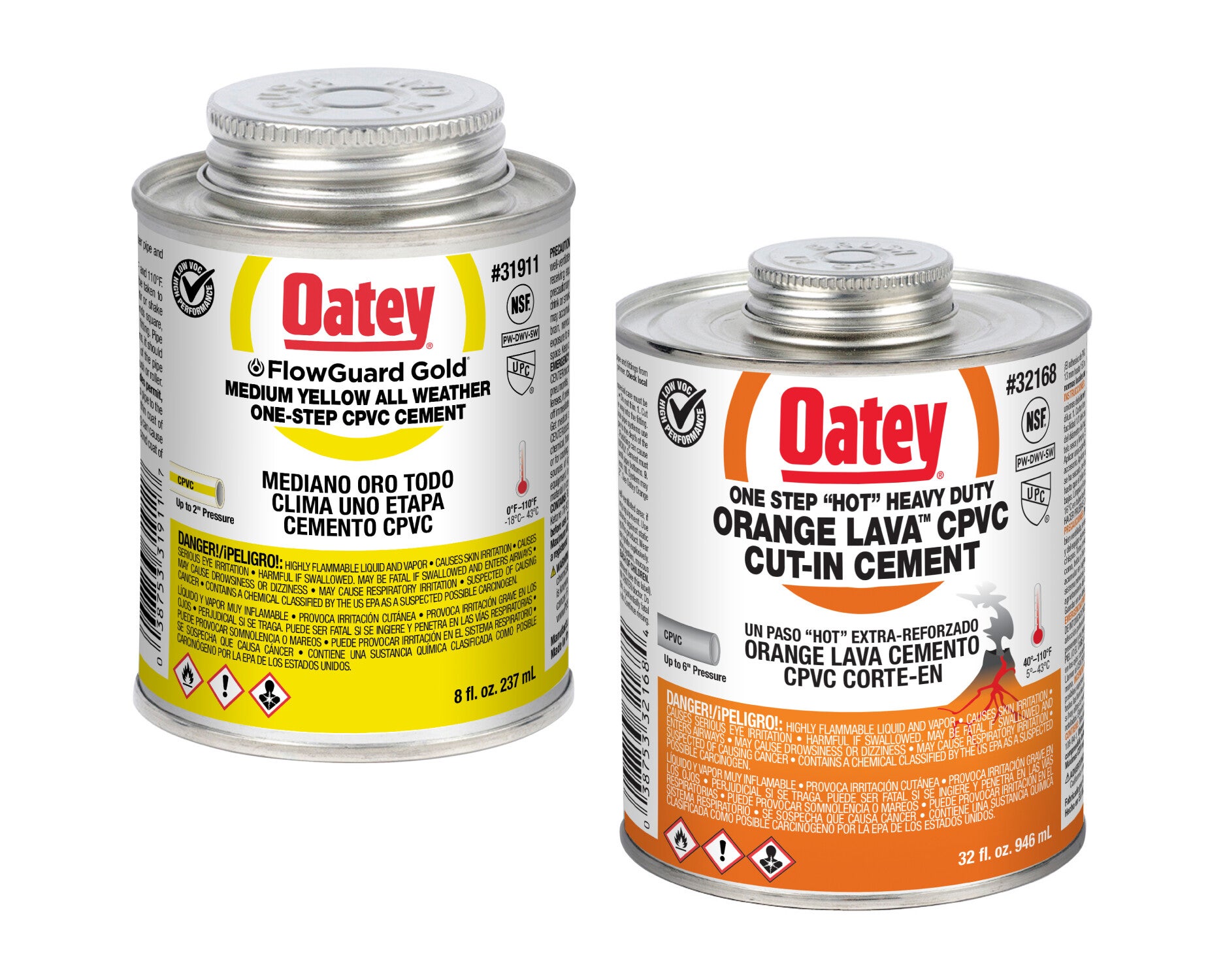
- For potable water systems, use a CPVC-specific cement such as FlowGuard Gold® Cement. For quick repairs, CPVC cements like Orange Lava® CPVC Cement are also designed for CPVC pipe.
To compare CPVC cements with PVC, ABS, and transition options, see How to Choose the Right Solvent Cement for the Job.
Mistake #2: Skipping Primer When It’s Required
Primer is required in many CPVC applications unless manufacturer instructions and local code allow a one-step solvent cement. The 2024 International Plumbing Code (IPC) Section 605.14.2, “Solvent cementing,” states that joints must be made in accordance with the pipe manufacturer’s installation instructions.
- If the manufacturer’s instructions require a primer, the primer must be applied before solvent cement.
- If the manufacturer’s instructions allow a one-step solvent cement conforming to ASTM F493, a separate primer is not required.
Local enforcement can be strict on a two-step process (primer + cement)—inspectors have the final say. There are one-step CPVC cements, such as Oatey® FlowGuard Gold® 1-Step Yellow Cement, that don’t require a separate primer. But whether that’s accepted can depend on local code interpretation.
Learn more about primer in Oatey 101: Solvent Cements and Primers.
Best Practices:
- If you’re using a non-one-step CPVC cement, prime first.
- If you’re using a one-step CPVC cement like FlowGuard Gold Cement, primer may not be required according to the product directions—but check local codes and inspector preferences.
- Don’t let the primer dry before applying the cement. Primer works by temporarily softening the surface; once it evaporates, that benefit is gone.
Mistake #3: Improper Application Technique
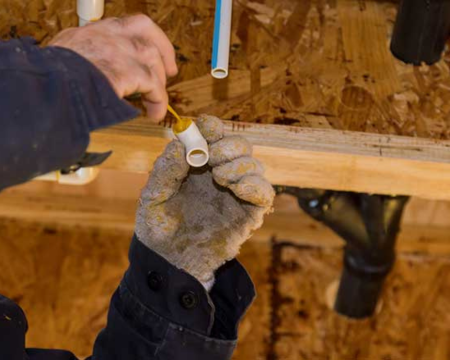
A chemical weld depends on full, even coverage and quick assembly. Problems usually show up when installers…
- Brush cement unevenly, leaving dry spots;
- Delay too long between cementing and assembly; or,
- Don’t fully seat the pipe.
Uneven coating can create leak paths. Applying cement to both surfaces helps ensure complete coverage.
For a step-by-step guide to solvent cementing, check out How to Easily Connect Pipes Using Solvent Cement.
Best Practices:
- Apply cement evenly with the right-size applicator.
- Coat the fitting and pipe surfaces thoroughly, then assemble immediately with a slight twist.
- Hold the joint together for about 10–20 seconds to prevent the joint from pushing back. CPVC fittings are tapered; if you let go too soon, the pipe can slowly back out and reduce the bond area.
Mistake #4: Not Preparing Pipe Surfaces
Solvent welding works only when the plastic surfaces are clean and properly fitted. Dirty, rough, or poorly cut CPVC can keep cement from contacting the material evenly.
Best Practices:
- Wipe the pipe and fitting with a clean, dry cloth.
- Deburr and chamfer cut edges.
- Dry-fit first to confirm a snug, smooth fit before cementing.
Mistake #5: Dry-Fitting and Forgetting to Cement
Dry-fitting can be useful for layout, but a joint that never gets cemented is a hidden failure waiting to happen. A dry-fit connection may hold briefly or even pass an initial pressure test, but then fail later due to vibration or water hammer.
Best Practices:
- After mock-ups, return to every joint and cement them before closing the job.
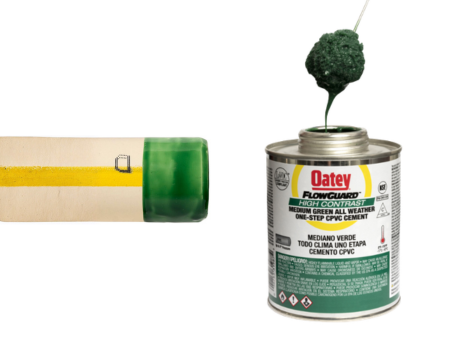
- Use visual indicators such as Oatey® FlowGuard™ High Contrast 1-Step Medium Green Cement (which is easy to spot on the pipe in dim light) to confirm each joint was welded.
Mistake #6: Applying Too Much or Too Little Cement
Too little cement can leave dry gaps and weak bonding. Too much cement usually pushes out harmlessly—but heavy excess can puddle inside the fitting, which may weaken the joint over time or partially obstruct flow.
Best Practices:
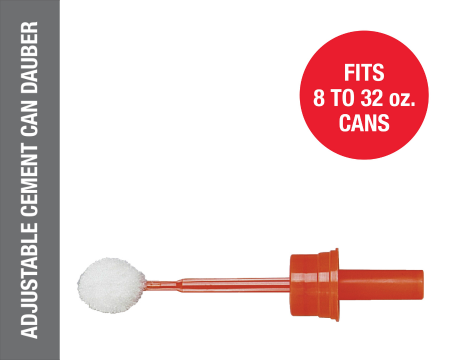
- Use the correct applicator size, such as Oatey® Adjustable Daubers available in 1 and ½-inch variations, and apply a uniform layer.
- Cover both pipe and fitting surfaces completely, but avoid flooding the socket.
- Remember: Complete coverage matters more than a “thin coat.” A little extra solvent cement on the outside of the pipe is better than missing a spot.
Mistake #7: Rushing Set and Cure Time
For CPVC, cure time is critical because the solvents must evaporate completely to create a strong weld. CPVC typically needs about double the cure time of PVC, and actual cure time depends on pipe size, temperature, humidity, and pressure conditions.
Best Practices:
- Pipe size: Smaller pipes (up to 2 inches) may cure faster than larger pipes.
- Humidity and temperature: High humidity or colder temperatures require longer curing times.
- Larger pipe and cold conditions: Expect longer cure times for larger pipe and for cold or humid environments.
- Before service: Don’t pressure-test or put hot-water lines into service until curing is complete.
CPVC — Cure Time by Temperature and Pressure
Follow Oatey’s CPVC Cement Curing Time Chart: Use this chart as a CPVC-specific reference, and always follow label instructions and technical guidance for your exact application.
| Pipe diameter | Pressure | 60–100°F (16–38°C) | 40–60°F (4–16°C) |
|---|---|---|---|
| 1/2" to 1-1/4" (13–32 mm) | Up to 180 psi | 1 hr | 2 hrs |
| 1/2" to 1-1/4" (13–32 mm) | 180 psi+ | 6 hrs | 12 hrs |
| 1-1/2" to 3" (40–80 mm) | Up to 180 psi | 2 hrs | 4 hrs |
| 1-1/2" to 3" (40–80 mm) | 180 psi+ | 12 hrs | 24 hrs |
| 4" to 5" (100–125 mm) | Up to 180 psi | 6 hrs | 12 hrs |
| 4" to 5" (100–125 mm) | 180 psi+ | 18 hrs | 36 hrs |
| 6" to 8" (150–200 mm) | Up to 180 psi | 8 hrs | 16 hrs |
| 6" to 8" (150–200 mm) | 180 psi+ | 24 hrs | 48 hrs |
Note: For temperatures below 40°F (4°C), contact Oatey Technical Services for cure-time guidance.
Mistake #8: Ignoring Environmental Factors (Temperature, Moisture, Ventilation, and Product Age)
These conditions often cause CPVC failures when they’re overlooked during installation or repair.
Temperature
Jobsite temperature affects solvent performance and cure time. Standard CPVC cements are typically rated for use when stored and applied between 40°F and 110°F. Cold product can thicken or crystallize, leading to poor welds.
Oatey® FlowGuard Gold® All Weather CPVC Cement is rated down to 0°F, but installers still need to protect the cement and primer from freezing and keep them as close to room temperature as possible before use.
Best Practices:
- Store CPVC cement in the recommended temperature range (above 40°F); don’t leave cans in an unheated van overnight in freezing weather.
- In cold conditions, keep cement warm before application and allow extra cure time.
For more tips on solvent welding in colder environments, read: 8 Tips for Cold Weather Solvent Welding.
Moisture and contamination
Water, oils, mud, or debris interfere with the chemical weld. Even a small stream of water through a pipe during assembly can prevent primer/cement from reacting with the CPVC, creating a leak path.
Best Practices:
- Make sure the pipe and fittings are dry and clean before priming and cementing.
- If surfaces are oily or heavily soiled, use a cleaner first, then apply a primer.
Ventilation/sealing too soon
If ends are sealed immediately, trapped solvents can weaken the joint and cause future cracking. Ventilation supports proper evaporation.
Best Practice:
- Leave one end open during curing when possible and ensure airflow around the work area.
Old or Expired Cement
Expired CPVC cement often appears thick, stringy, chunky, or jelly-like because the solvents have evaporated. With less solvent, the cement won’t soften CPVC properly, and the weld strength drops. CPVC cement has a two-year shelf life from the date of manufacture.
Best Practices:
- Check the manufacturing dates and discard CPVC cement past its expiration date.
- If cement is unusually thick or separated, replace it.
To learn more about solvent cement’s shelf life, read: What Is the Shelf Life for Solvent Cement Primer and Cleaner?
System Compatibility
Some CPVC piping systems are tested and warranted only with specific cements; e.g., FlowGuard Gold® CPVC pipe systems are paired with FlowGuard Gold® cement. Using a different cement may work mechanically, but could affect approvals or warranty coverage.
Best Practices:
- Use manufacturer-approved cement for the CPVC system you’re installing, and verify compatibility when in doubt.
Final Takeaway
CPVC is a tough, reliable piping material for hot water and other demanding applications—but only when its joints are solvent-welded correctly. The big wins are simple:
- Use CPVC-specific cement.
- Prime when required.
- Apply cement evenly and seat/hold the joint.
- Prep clean, dry surfaces.
- Respect cure times.
- Manage temperature, ventilation, and product condition.
Stick to those fundamentals, and you’ll avoid the most common CPVC installation errors—and deliver stronger, longer-lasting systems. For general solvent welding mistakes across PVC, CPVC, and ABS, see 5 Common Solvent Welding Mistakes.
For the full solvent welding process across PVC, CPVC, and ABS, see How to Solvent Weld PVC, CPVC, and ABS Pipe.
Published on May 08, 2026
Frequently Asked Questions
-
What solvent cement should I use for CPVC pipe?
-
Use a cement that’s specifically formulated and labeled for CPVC. For FlowGuard Gold® CTS systems (typically up to 2 inches), FlowGuard Gold® cement is the intended one-step option. For larger CPVC sizes, a medium- or heavy-bodied CPVC cement may be more appropriate.
-
-
Do I need primer for CPVC?
-
In most cases, yes—primer is required for CPVC solvent welding to ensure proper softening and bonding, and local code/inspector requirements apply. However, FlowGuard Gold® CPVC cement is a one-step cement that does not require a separate primer, per product directions.
-
-
Can I use PVC cement on CPVC pipe?
-
No. PVC cement is chemically different and won’t create the correct bond on CPVC materials.
-
-
Why do my CPVC joints keep leaking?
-
Leaks are usually caused by installation issues, such as improper cement application, joints that weren’t fully seated or held in place to prevent push-back, rushing set/cure times, wet or contaminated pipe, or using old cement. In some chemical-waste/industrial applications, leaks can also occur if the cement isn’t compatible with the chemicals being transported; e.g., not using the EP 42 formula when required.
-
-
How long should CPVC solvent cement be allowed to cure?
-
Cure time depends on pipe size and jobsite conditions, like temperature and humidity (and can also be affected by pressure and sunlight). Follow the CPVC cure-time chart for your specific conditions before pressurizing the system.
-
-
What are the signs that CPVC cement has expired or is too old to use?
-
Expired CPVC cement often turns thick, stringy, chunky, or “jelly-like” because the solvents have evaporated. If the cement looks like that, it should be replaced.
-
-
What is the shelf life of CPVC solvent cement?
-
CPVC cement has a two-year shelf life from the date of manufacture. Always check the manufacture date on the can.
-
-
Do I need to worry about compatibility with FlowGuard Gold® pipe or other CPVC systems?
-
Some CPVC piping manufacturers specify (and warranty) their systems only when paired with their approved cements. FlowGuard Gold® is a CTS CPVC system with a cement designed for that system. If you wish to use a different CPVC cement, confirm its acceptability with the pipe manufacturer for warranty/approval reasons.
-