Home Back to top
Utility Nav
About Careers Contact Us Where to Buy
Select Region/Language
Solvent Cements, Primers & Cleaners Thread Sealants Copper Installation Putty, Caulks & Water Barriers Oils, Lubricants & Cleaners Drain & Waste System Cleaners Heating Chemicals & Antifreeze Gaskets & Bolts Drains & Toilet Flanges Shower Systems Supply Flashings Air Admittance Valves (AAV) Pipe Support Brass, Plastic & Commercial Tubular/Grab Bars Bath Waste & Overflow Baskets & Sink Strainers Pneumatic Test Balls Mechanical Test Plugs Testing Equipment / Tools & Accessories Pans & Stands Commercial Drains Rough-In Products
View All
Cherne Dearborn Harvey Hercules Keeney Oatey QuickDrain Plumb Pak
View All
Commercial Plumbing Residential Plumbing Specialty Construction Waterworks
View All
Project Guides Videos Data Sheets (SDS) & Product Literature Product Catalogs FAQs Blog Case Studies BIM Revit 3 Part CSI, Master Spec ARCAT Blue Volt Training
View All
Oatey Brand Ambassadors Oatey University Podcast - The Fix Events & Experiences Supplier Diversity Contact Us Subscribe
View All
About Careers Contact Us Where to Buy Select Region

AAV

< Back to Home

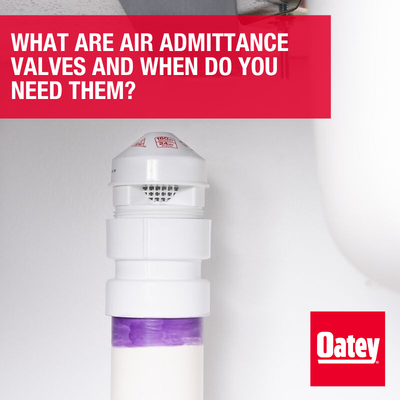
What are air admittance valves (AAVs)?

Air Admittance Valves (AAVs) are plumbing devices that allow air to enter a drainage system when negative pressure occurs, helping maintain proper system pressure while preventing sewer gases from entering the building.

Are Oatey air admittance valves code-compliant?

Yes, Oatey Sure-Vent Air Admittance Valves comply with ASSE Standards 1050 and 1051 and are IAPMO listed, making them acceptable under many plumbing codes when installed in accordance with local regulations and manufacturer instructions.

What are the benefits of using an AAV over a traditional vent?

AAVs simplify installation, reduce roof penetrations, and are ideal for remodels or locations where venting through the roof is not feasible.
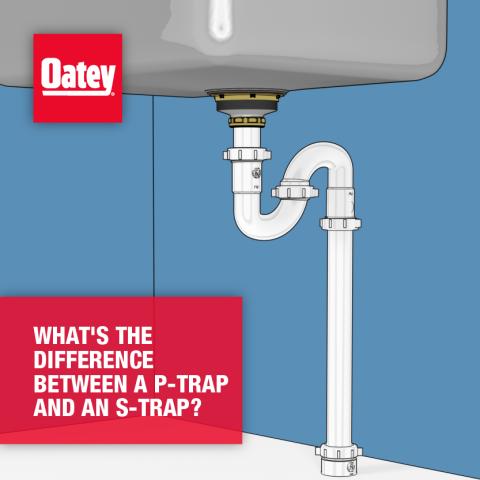
What's the Difference Between a P-Trap and an S-Trap?
Blog What's the Difference Between a P-Trap and an S-Trap? Read More
How to Install Secondary Venting Systems – Air Admittance Valves (AAV) Installation
How To How to Install Secondary Venting Systems – Air Admittance Valves (AAV) Installation Read More
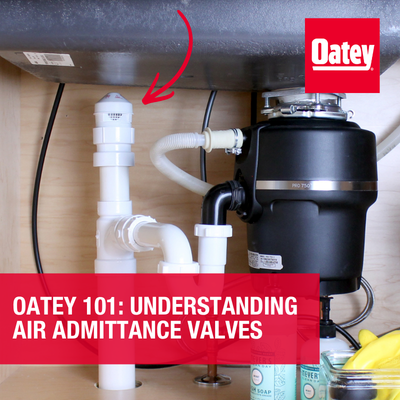
Oatey 101: Understanding Air Admittance Valves
Blog Oatey 101: Understanding Air Admittance Valves Read More
Plumber Uses Air Admittance Valve For Outdoor Washrooms, Ensuring Proper Venting and Protection Against Moisture
Case Study Plumber Uses Air Admittance Valve For Outdoor Washrooms, Ensuring Proper Venting and Protection Against Moisture Read More
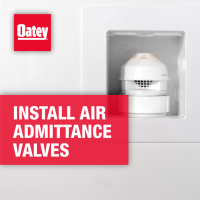
How to Install an Air Admittance Valve
Blog How to Install an Air Admittance Valve Read More

How do air admittance valves work?

Air Admittance Valves open automatically to admit air into the drainage system when wastewater flows and negative pressure develops, equalizing pressure and supporting proper drainage. When not in use, the valve closes to block sewer gases from escaping into occupied spaces.
3 Things You Should Know about Air Admittance Valves
Blog 3 Things You Should Know about Air Admittance Valves Read More
the choice of plumbing professionals
Oatey
Resources
FAQs Videos Blog Case Studies Plumbing Terms Data Sheets (SDS) & Product Literature Product Category Guide BIM Revit CSI 3 Part Spec Oatey Limited Warranty ARCAT Catalogs Blue Volt Training
Company Info
Supplier Diversity About Us Careers Idea Portal Oatey Swag
Resources
FAQs Videos Blog Case Studies Blue Volt Training ARCAT
Technical Resources
Data Sheets (SDS) & Product Literature Product Category Guide BIM Revit CSI 3 Part Spec Oatey Limited Warranty Catalogs
Company Info
About Us Careers Supplier Diversity News & Press Idea Portal Oatey Swag
Connect With Us

Contact Us

Patents | Trademarks | Supply Chain Information | Privacy Policy | Website Terms Of Use | Chatbot Disclaimer
© Oatey Co. All rights reserved.

It appears that you're using an unsupported browser.

If you are currently using Internet Explorer we recommend you switch to Edge or another supported browser to enjoy the best experience Oatey.com has to offer.

Learn More

OK