
PVC cement for wet conditions is often needed when repairing a pool-return line during a storm or tying into irrigation piping in a muddy trench. Moisture changes how solvent welding behaves. It can affect surface prep, slow solvent evaporation, and extend cure time, all of which is a problem when the system needs to get back online quickly.
Of course, the fundamentals of solvent welding never change, regardless of the conditions. The process still relies on solvent cement softening the pipe and fitting surfaces so they fuse into one continuous piece of plastic.
This blog focuses on wet and damp jobsite conditions — not fully submerged or underwater solvent cement application. It explains how wet environments affect solvent welding, how to choose the right PVC cement (or CPVC cement) for wet conditions, and where the limits are.
For a complete overview of solvent welding basics, visit How to Solvent Weld PVC, CPVC, and ABS Pipe.
Quick Answer: PVC cement can be used in wet or damp conditions when the product is formulated for those conditions, the pipe is not submerged, surfaces are prepared as cleanly and dry as possible, and the cement is applied in open air according to label instructions. Wet conditions are different from underwater application, and pipe material still matters — use PVC cement for PVC pipe and CPVC-compatible cement for CPVC pipe.
Wet Conditions vs. Underwater Solvent Welding
Solvent welding demands direct contact between the cement and the pipe material. When water interferes, the chemical process can’t work the same way. That’s why it’s important to distinguish between wet conditions and underwater installation.
Wet conditions mean moisture is present, but the pipe is not submerged. Common examples include:
- Light rain during installation
- Residual water inside a pipe
- Damp trenches
- High humidity
These conditions are common in irrigation and outdoor plumbing work. Even after draining a line, small amounts of water often remain.
Underwater conditions, on the other hand, involve joints that are actually below standing water, or pipes with flowing water during installation.
In those situations, solvent cement cannot properly soften and fuse the pipe and fitting. Water blocks contact with the plastic, gels the cement, dilutes the solvent, and prevents the reaction needed for a strong bond.
Some specialty cements allow the joint to be assembled underwater after cement is applied above water, but the cement itself still must be applied in open air. In other words, a wet-condition cement may help when moisture is present, but it does not make standard solvent cement suitable for underwater application.
Important: Wet or damp conditions are not the same as underwater application. Always apply solvent cement in open air and follow the product label instructions.
For more detail on how solvent cement works, see Oatey 101: What Is Solvent Cement and Primer?
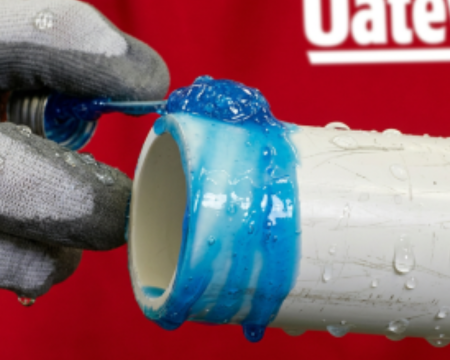
Why Wet Conditions Change Solvent Welding Performance
Wet conditions can affect several critical steps in the solvent welding process. Moisture on the pipe, humidity in the air, and debris from the surrounding environment can all influence how solvent cement bonds and cures. To understand why wet environments require extra attention during installation, it’s helpful to look at three key factors: surface preparation, solvent evaporation, and working time.
In wet environments, the goal is to keep surfaces as clean and dry as possible, choose a cement formulated for the conditions, and allow proper cure time before returning the system to service.
1. Surface preparation
Solvent cement must contact clean plastic to work properly. Water, mud, and debris can block that contact.
In outdoor installations—especially irrigation trenches—wet soil can stick to pipe surfaces and create leak paths in the joint.
Before applying cement:
- Wipe the pipe and fitting as dry as possible
- Remove mud and debris
- Confirm proper pipe fit
- Use cleaner and primer where required
For the full surface-prep and solvent welding process, see How to Solvent Weld PVC, CPVC, and ABS Pipe.
2. Solvent evaporation
Solvent welding relies on evaporation after the joint is assembled. High humidity slows that evaporation.
This means longer set times and longer cure times. A joint may feel firm on the outside while the inside is still soft.
Pressurizing the system too soon is a common cause of failure in wet environments.
For cold or humid jobsite conditions, see 8 Tips for Cold-Weather Solvent Welding.
3. Working time
Working time refers to the period during which cement remains fluid enough to assemble the joint.
In damp environments, shorter working times can help reduce the chance of moisture interfering with the weld. For this reason, contractors often choose faster-setting formulations for pool and irrigation repairs.
Pool & Spa Applications: What to Consider
Pool and spa plumbing is typically installed outdoors, where humidity, rain, and residual water are common. When choosing pool PVC cement or spa PVC cement, start by confirming the pipe material, system pressure, moisture level, and cure-time requirements.
Pressure system compatibility
Return lines, pumps, and heaters operate under pressure. Always confirm the cement is approved for pressure-rated PVC or CPVC systems.
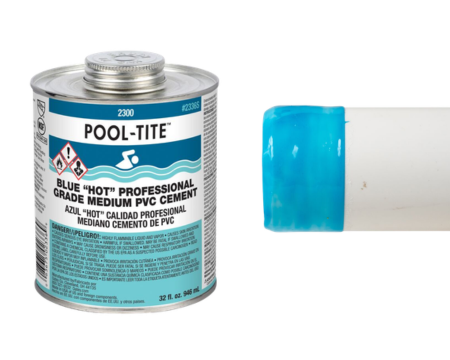
Performance in damp conditions
Even after draining, moisture often remains in the lines. A cement designed for damp environments helps ensure proper fusion.
Cure time before restarting the system
Temperature, humidity, and pipe size all affect cure time. Restarting pumps too soon can compromise the joint.
Outdoor conditions
Temperature swings and sun exposure can also influence installation timing.
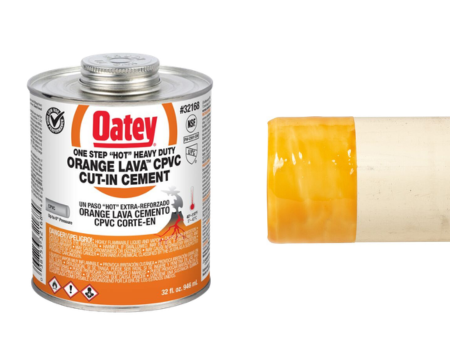
Solvent Cements Commonly Used for Pool & Spa Applications:
The products below are examples of solvent cements commonly used in wet or damp jobsite conditions. Many pool, spa, and irrigation applications use PVC pipe, but some systems or repairs may include CPVC components. Always match the cement to the pipe material first, then confirm system type, label instructions, application conditions, and local code requirements.
| Product | Best Use | Pipe Material | Key Features | Notes |
|---|---|---|---|---|
| Oatey® Pool & Spa Medium Blue Fast Setting PVC Cement | Pool and spa PVC system applications, including pool line repairs, spa maintenance, and quick cut-ins. | PVC | Medium-bodied, very fast-set blue PVC cement formulated for wet conditions, fast pressurization, and quick installation. | For PVC pipe and fittings up to 6 in. diameter with interference fit; no primer needed where local code permits; application temperature 40°F to 110°F. |
| Oatey® 2300 Series Pool-Tite™ PVC Cement | Pool and spa PVC applications where Pool-Tite™ is specified, preferred, or available through the sales channel. | PVC | Pool/spa-focused PVC cement option for wet-condition pool and spa work. | Confirm product label, pipe size, local code, application temperature, and primer requirements. |
| Oatey® Rain-R-Shine® Medium Blue PVC Cement | Pool, spa, irrigation, and outdoor plumbing where moisture is present. | PVC | Designed for wet or humid environments; handles pipes with residual moisture; commonly used for outdoor installations. | Often considered a one-step cement, meaning a separate primer may not be required in some applications. |
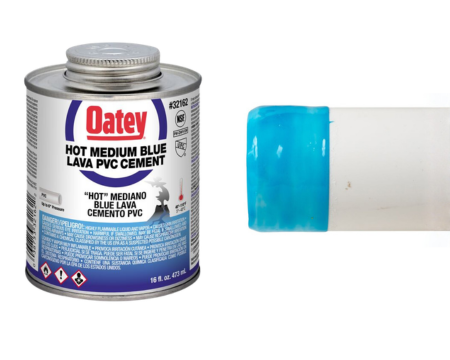
| Oatey® Hot Medium Blue Lava PVC Cement | Demanding service repairs or situations where very fast set time is required. | PVC | Thicker formula that clings to pipe surfaces; very fast-setting for quick repairs. | Extremely short working times. The joints must be assembled immediately and held to prevent push-out. |
| Oatey® Orange Lava CPVC Cut-In Cement | CPVC plumbing systems, especially when service must be restored quickly. | CPVC | Fast-set, cut-in cement designed for rapid repairs. | Systems may sometimes be re-pressurized within 30–60 minutes, depending on conditions; always follow label instructions and cure-time guidance. |
For additional guidance, see How to Choose the Right Solvent Cement for the Job.
Irrigation and Outdoor Plumbing Applications
PVC is widely used in irrigation and outdoor plumbing because it’s cost-effective, durable, and easy to install.
Outdoor installations often involve conditions such as:
- Rain and humidity
- Groundwater or shallow water tables
- Residual water in existing lines
- Open trench work
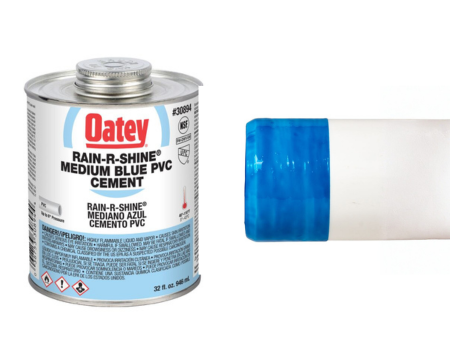
Irrigation contractors frequently assemble pipe in damp trenches where groundwater is present. Similar wet or damp conditions can also occur in outdoor water lines, campground facilities, farm irrigation systems, and backyard plumbing projects.
When choosing an irrigation PVC cement, consider moisture in the line, trench conditions, system pressure, and how quickly the system needs to return to service.
In these situations, solvent cements designed for wet conditions can help support reliable joints when surfaces are properly prepared and label instructions are followed.
Common Mistakes to Avoid in Wet-Condition Solvent Welding
Wet-condition solvent cements can help in damp environments, but they do not eliminate the need for proper surface prep, fit, application, and cure time. One of the most common mistakes is not removing as much water as possible before applying cement. Wet-condition cements can tolerate some moisture, but the joint should still be as dry as possible.
Another mistake: Repairing a pipe while water is actively flowing through it. Solvent welding needs time to form the bond, so keeping the joint dry during this period is critical.
Installers should also avoid skipping basic prep steps:
- Cut the pipe square.
- Chamfer or deburr the edge.
- Clean pipe and fittings.
- Apply cement evenly.
When poor prep combines with wet conditions, the risk of leaks or joint failure increases.
For a full breakdown of installation errors and how to prevent them, see 5 Common Solvent Welding Mistakes.
When to Pause the Job
The right cement can help in damp conditions, but some conditions still require waiting, draining, cleaning, or restarting the repair.
Consider postponing installation if you encounter:
- Active flowing water in the pipe
- Fully submerged joints
- Heavy contamination inside the pipe
- Temperatures outside product limits
If these conditions are present, pause the repair, remove active water or contamination where possible, and restart only when the joint can be properly prepared and assembled according to label instructions.
As noted, wet jobsite conditions are common in pool, spa, and irrigation work. The right cement, combined with proper preparation and realistic cure expectations, helps ensure reliable joints.
For step-by-step solvent welding guidance, start with How to Solvent Weld PVC, CPVC, and ABS Pipe. For product selection help, see How to Choose the Right Solvent Cement for the Job.
Published on July 16, 2026
Frequently Asked Questions
-
Can you glue PVC pipe when wet?
-
People often say “glue,” but PVC pipe is joined with solvent cement. PVC should ideally be cemented on clean, dry pipe surfaces. However, some solvent cements are formulated to perform in damp or wet conditions when proper preparation steps are followed, the pipe is not submerged, and the cement is applied according to label instructions.
-
-
Can you use PVC cement underwater?
-
Standard PVC cement should not be applied underwater. Some specialty products may allow joints to be assembled underwater after cement is applied above water, but the cement itself must be applied in open air according to product instructions.
-
-
What’s the best PVC cement for pool plumbing?
-
The best PVC cement for pool plumbing depends on pipe material, moisture level, system pressure, cure-time needs, and product availability. Oatey pool/spa-focused options include Oatey® Pool & Spa Medium Blue Fast Setting PVC Cement and Oatey® 2300 Series Pool-Tite™ PVC Cement. Other wet-condition products, such as Rain-R-Shine® or Hot Blue Lava®, may also be appropriate depending on the application. If the system includes CPVC components, use a CPVC-compatible solvent cement. Always confirm the product label and local code requirements.
-
-
What PVC cement should I use for irrigation repairs in wet conditions?
-
For irrigation repairs, choose a PVC solvent cement that matches the pipe material, system pressure, moisture conditions, and return-to-service needs. Many irrigation jobs involve damp trenches, residual water, or outdoor humidity, so contractors often use formulas designed for wet or damp conditions.
-
-
Can I use PVC cement on CPVC pipe in wet conditions?
-
No. Wet-condition performance does not override pipe material compatibility. If the system includes CPVC pipe or fittings, use a CPVC-compatible solvent cement, such as Oatey® Orange Lava CPVC Cut-In Cement, and follow the product label, cure-time guidance, and local code requirements.
-