
Solvent welding is a plumbing method used to create permanent, leak-free connections between plastic pipe and fittings. This process relies on specially formulated primer and solvent cement that work together to prepare the pipe surface and fuse materials.
Oatey provides reliable options for PVC, CPVC, and ABS applications, and this guide serves as an introduction to the purpose of these products and how they support durable pipe systems. This article explains what solvent cement and primer are, and why they are essential to the solvent welding process.
This blog covers the basics (what and why). For step-by-step solvent welding instructions, see How to Solvent Weld PVC, CPVC, and ABS Pipe.
What is Solvent Cement?
Solvent cement is not glue. Glue creates a surface bond, while solvent cement creates a permanent chemical weld between two plastic pipe surfaces. Once applied to PVC, ABS, or CPVC pipe and fittings, the top layer softens and dissolves. As the joint cures, the two surfaces fuse into a single, continuous piece, forming an airtight seal.
Oatey offers solvent cements for many system types and job conditions. The appropriate cement depends on pipe material, size, application temperature, and the environment where you’re working.
Types of Solvent Cement
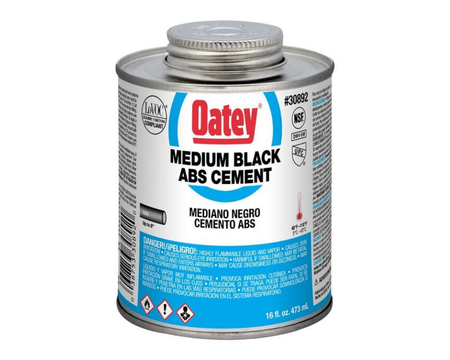
ABS Cement
ABS solvent cements are formulated specifically for ABS pipe, which is a single-layer, rigid plastic material used in many non-pressure systems. These cements must be used only on ABS pipe and fittings because the chemistry is specifically designed to soften and dissolve the ABS surfaces, allowing them to fuse correctly.
PVC Cement
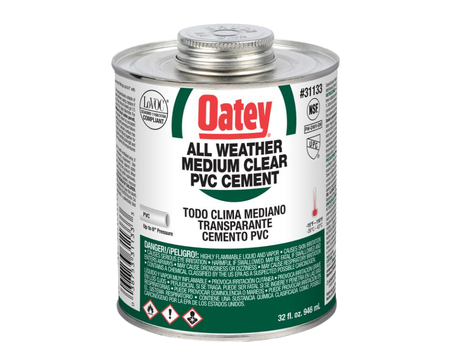
PVC solvent cements are formulated for use with PVC pipe, which is utilized in DWV, pressure, potable water, and electrical conduit systems. PVC has different physical and chemical characteristics from ABS or CPVC, so it requires a cement that can soften and dissolve its specific surface structure.
CPVC Cement
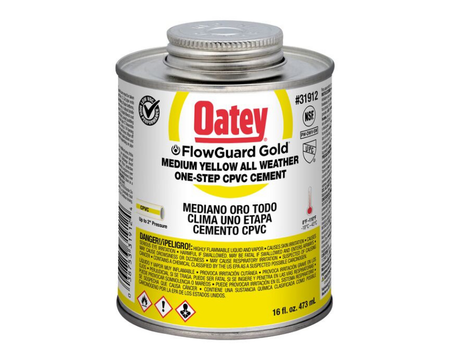
CPVC solvent cements are formulated to bond CPVC pipe, which is engineered for hot and cold water systems and has a higher temperature rating than PVC or ABS. CPVC requires a specific cement because its chemical makeup and heat resistance demand a formula that softens the material correctly without compromising its performance.
All-Purpose Cement
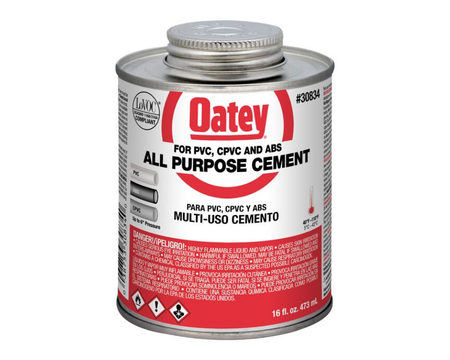
All-purpose cements are formulated for use on PVC, CPVC, and ABS pipe and fittings, making them a convenient option when you need a cement that covers multiple plastic materials. However, it is not approved for transition joints (such as ABS-to-PVC connections). For transitions, use a solvent cement specifically labeled for transition applications.
For help choosing the best cement for your pipe material, size, or project needs, visit How to Choose the Right Solvent Cement for the Job.
Set and Cure Time Basics
Set and cure times are essential parts of solvent welding because they determine when a PVC, CPVC, or ABS joint becomes stable and when it reaches full strength. After solvent cement is applied, the pipe and fitting surfaces soften and begin to fuse. Set time refers to the period during which the joint must remain undisturbed to hold together, while cure time is the time required for the chemical weld to fully solidify and strengthen.
Temperature plays an important role in both stages—warmer conditions generally allow joints to cure faster, while cooler conditions slow evaporation and extend the time needed for the weld to reach full strength.
You can find the recommended set and cure times printed on the back of the solvent cement can. Manufacturers provide specific guidance based on the product type and application conditions.
What Is Primer and Why Is It Important?
Primer is a pre-treatment used in the solvent welding process for PVC and CPVC pipe. It removes dirt, grease, and grime from the surface and softens the plastic, allowing the surface molecules to become more open and porous. This prepares the pipe and fitting for a strong chemical weld.
A primer is required by plumbing codes for PVC and CPVC applications, but is not used on ABS pipe. Skipping the primer can weaken the PVC or CPVC joint and may lead to leaks.
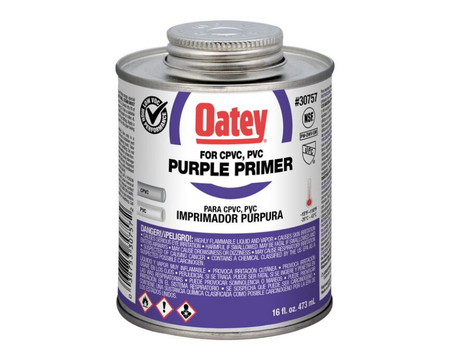
Primer Options and Material Compatibility
Different primer types support different applications.
- Hercules® Purple Primer works on PVC and CPVC and provides visible color for inspection.
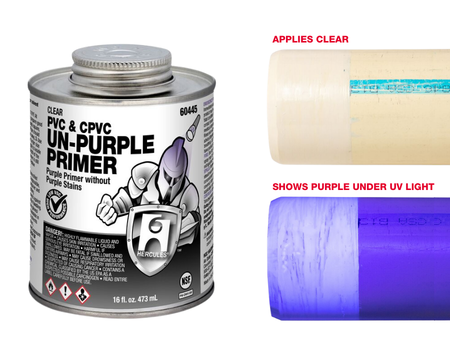
- Hercules® Un-Purple Primer applies clear and shows a purple tint under UV light to confirm primer use.
- Oatey® Industrial Grade Clear Primer is a more aggressive formula suited for commercial and large-diameter PVC and CPVC systems.
For information on product performance and storage, visit What Is the Shelf Life of Solvent Cement, Primer, and Cleaner?
Temperature and Application Requirements
The maximum application temperature for primer is 110°F. When priming, use a heavier, more deliberate application to ensure the solvents penetrate the pipe surface. The purpose of the primer is to break down surface tension, allowing the cement to properly bond with the materials.
Do You Always Need a Primer?
A primer is required for PVC and CPVC pipes, but not for ABS. Single-step products such as Oatey® Fusion® Single-Step PVC Cement are exceptions when rated for no-primer applications (or where code allows). Using primer remains best practice in most installations because it helps ensure a complete and reliable solvent weld.
Learn more about how and when to use Oatey Fusion® in our DIY Project Guide.
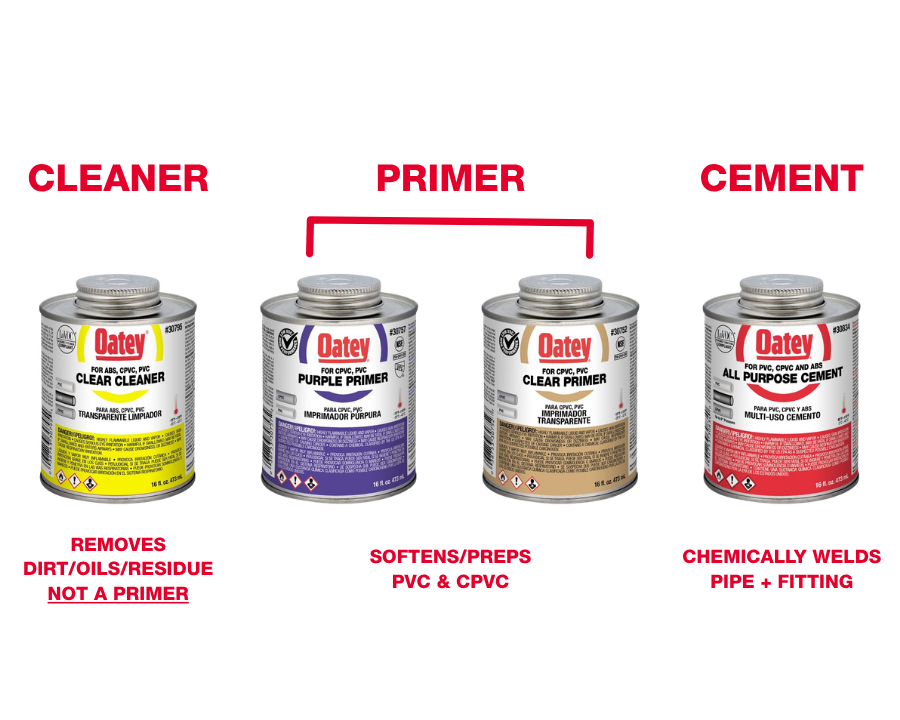
Cleaner, Primer, and Cement Overview
| Removes dirt, oils, and surface residue without altering the pipe or fitting surface | Optional pre-clean step | Hercules® Plastic Pipe And Fittings Cleaner |
| Softens plastic surfaces and initiates the chemical welding process | Before cementing on PVC and CPVC | Hercules® Purple Primer For PVC and CPVC |
| Chemically welds pipe and fittings | After surface prep (and priming where required). | Oatey® All Purpose Cement |
Storage, Safety, and Handling Tips
- Store primer and cement between 40°F and 110°F.
- Keep lids tightly sealed to maintain consistency.
- Maintain ventilation and keep materials away from sparks or open flame.
- Inspect products for separation or thickening before reuse.
For additional guidance on performance, storage, and longevity, visit What Is the Shelf Life of Solvent Cement, Primer, and Cleaner?
Conclusion
Primer and solvent cement work together to create durable, long-lasting pipe connections. Primer prepares the surface, and cement bonds the materials into a single structure. Professionals and DIY users rely on these products for dependable performance across commercial and residential plumbing systems. Oatey provides a wide range of options to match every material and application.
Now that you know the basics, learn how to solvent weld plastic pipe systems step-by-step with our complete Oatey guide: How to Solvent Weld PVC, CPVC, and ABS Pipe.
Published on March 26, 2026
Frequently Asked Questions
-
What is the difference between primer and solvent cement?
-
Primer prepares and softens the plastic surface for bonding, while solvent cement chemically fuses the pipe and fitting together to create a permanent, watertight connection.
-
-
Do I always need to use primer before solvent cement?
-
Yes, in most cases. Primer is required for PVC and CPVC pipe, according to plumbing codes. The only exceptions are ABS pipe and certain single-step products, such as Oatey® Fusion® Single-Step PVC Cement.
-
-
Can I use cleaner instead of primer?
-
No. Cleaner removes dirt and grease, but it doesn’t soften the plastic or prepare it for chemical bonding. Always use primer before applying cement unless the product is rated as “no-primer required.”
-
-
What happens if I skip primer?
-
Skipping primer can result in weak joints that may leak or fail over time. Proper priming ensures a complete chemical weld between pipe and fitting.
-
-
How should I store primer and solvent cement?
-
Store them tightly sealed at room temperature (40°F to 110°F), away from heat or flame. Replace if the product thickens or separates.
-
-
How long do primer and cement last?
-
Most PVC and ABS solvent cements and primers have a shelf life of up to three years when stored properly and left unopened, while CPVC products have a shorter shelf life of up to two years. Once opened, exposure to air and temperature changes can reduce usable life. Always check the date code and inspect for thickening, separation, or a jelly-like texture before use.
-