
Choosing the right toilet flange is one of the most crucial decisions when installing or replacing a toilet. A toilet flange, also called a closet flange, is a pipe fitting that connects your toilet to your home's drainage system, creating a watertight seal that prevents leaks, odors, and sewer gases from escaping. The right flange depends on your pipe material (PVC, ABS, or cast iron), floor height, and application type (new install, repair, or specialty situation).
This comprehensive guide walks you through every type of toilet flange available, helping you select the best option for your specific project.
What Is a Toilet Flange and Why Does It Matter?
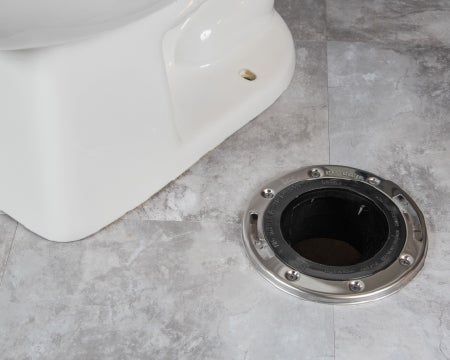
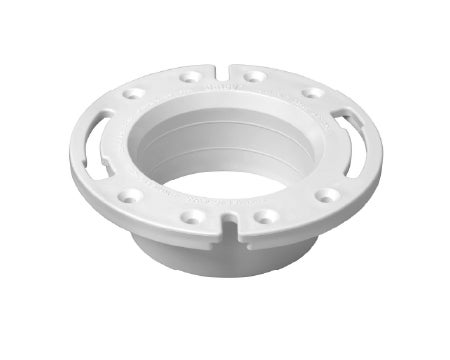
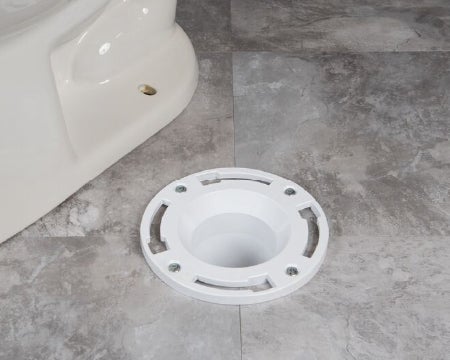
A toilet flange, also called a closet flange, is a pipe fitting that connects a toilet to the home’s or building’s drainage system through an approved connection method. The flange is also securely anchored to the subfloor with rust-resistant screws, ensuring stability and preventing movement.
A wax ring mounted on the closet flange creates a watertight seal between the bottom of the toilet and the closet flange, preventing any leaks, odors, or sewer gases from escaping the fixture. T bolts—or as Oatey calls them, "Johni-Bolts"—are used to connect the toilet (via slots) to the toilet flange.
How Do You Choose the Right Toilet Flange?
Today’s market offers a variety of flange types based on material composition and installation configurations. Among the options are plastics (PVC, ABS), cast iron, brass, or variations tailored to specific application needs.
The right flange depends on three factors:
- Pipe material of the drainage or sanitary system (PVC, ABS, or cast iron) and connection method
- Floor height
- Application type (new install, repair, offset for tight spaces, etc.)
Before heading to your local supply house or hardware store to purchase a toilet flange, let’s explore the different types to ensure you choose the correct one for your specific application. This guide walks you through the major toilet flange categories by material and design — so you can select the best option for your project.
For step-by-step installation instructions, refer to our guide on < href="https://www.oatey.com/resources/project-guides/install-toilet-flange">How to Install a Toilet Flange.
What Are the Main Types of Toilet Flanges by Material?
PVC or ABS Flanges
PVC flanges are the most common choice for new installations and are also a reliable option for complete replacements. They are solvent-welded to PVC pipe using PVC cement, and should sit on top of the finished floor, creating a secure, watertight connection between the toilet and the drain line.
ABS flanges (a black plastic) are used with ABS drain systems. They involve the same installation method as PVC, but are chemically different, so they must be solvent-welded with ABS cement.
PVC and ABS flanges are durable, easy to work with, and compatible with all standard toilets.
Key Oatey PVC or ABS flange options include:
- Oatey® Level Fit Closet Flanges: These plastic flanges are available in both PVC and ABS and are an excellent option when replacing an existing flange or installing a new one. Each flange features six screw holes for easy installation and includes a durable metal ring that provides added strength, rotating 360 degrees to allow precise bolt and screw alignment. The Level Fit design installs inside 3-inch Schedule 40 DWV pipe, over 3-inch pipe, inside 4-inch pipe, or over 4-inch pipe. Inside-pipe installation is particularly beneficial in basement or commercial applications, where concrete often surrounds the drainpipe before the toilet is installed.
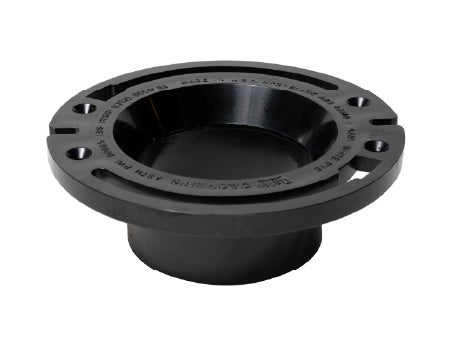
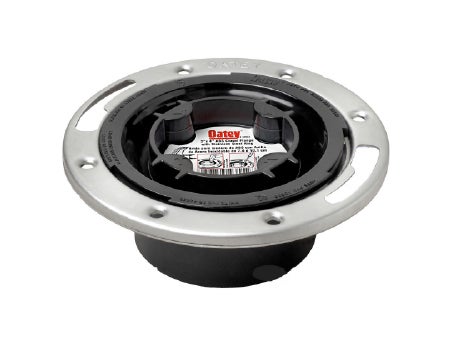
- Oatey® Easy Tap® Closet Flanges: This plastic flange is another reliable option, available in both PVC and ABS. It features a knockout test cap that breaks out cleanly, preventing debris from dropping into the drain. These flanges are available with stainless steel, metal, or plastic rings and fit either over a 3-inch pipe or inside a 4-inch pipe. Easy Tap is ideal for new plumbing systems that require testing or for remodels where it’s essential to contain sewer gases during installation.
Cast Iron Flanges
Cast iron flanges are often found in older homes and commercial buildings, and they remain a reliable choice for heavy-duty applications.
Instead of cutting out old cast iron, you can repair it with a drop-in option, such as the Oatey® Twist-N-Set® Replacement Closet Flanges. These are designed to replace broken cast iron closet flanges with a gasket that expands to fit inside service weight, heavy weight, and no-hub pipe. The replacement flange installs easily without tools and features a smooth, unrestricted flow design.
Oatey offers several cast iron flange options designed for strength and ease of installation.
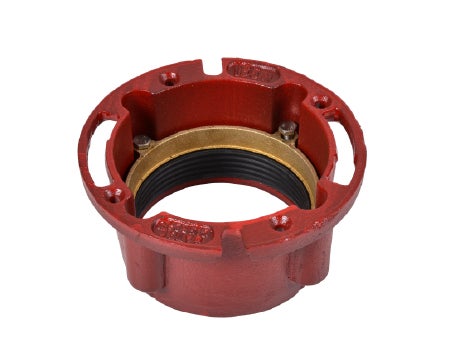
The Oatey® Cast Iron Closet Flanges are designed for use on plastic pipe or heavyweight, service weight, or no-hub cast iron soil pipe. They install over either a 3-inch or 4-inch pipe without requiring access from below. Installation is simple and caulk-free, as each flange comes complete with the body, brass ring, bolts, gasket, and a pre-installed test cap.
For installations where the pipe is recessed or the finished floor is raised, the Oatey® Cast Iron Deepset Closet Flange offers a 4-inch, deep-set barrel while maintaining all the same design features as the standard version.
To install an Oatey Cast Iron Closet Flange:
- Place it over the pipe so the gasket secures to the pipe.
- Tighten the integrated fasteners to the pipe to secure the closet flange.
- Use fasteners to secure the flange to the subfloor
- Add the closet bolts to secure the toilet fixture.
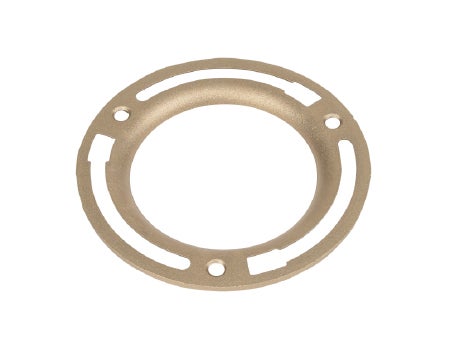
Brass Toilet Flange
In older homes, it is common to find plumbing connections that utilize a lead bend. A skilled tradesperson should carry out the installation of these connections, as it requires the traditional lead-and-solder method.
The connection is made by peening the lead into the flange and securing it with solder. However, repairs can be quite challenging because the lead material often deteriorates over time, necessitating a complete replacement of the lead bend.
Oatey® Brass Closet Flange Replacement Ring can be used when you are repairing a lead bend. It would involve the peening of the lead and soldering to create the seal.
The Oatey® Twist-N-Set® Replacement Closet Flange can be used to replace a brass toilet flange with a gasket that expands to fit inside of service weight, heavy weight and no hub pipe. The replacement flange installs easily without tools and features a smooth, unrestricted flow design.
What Specialty Toilet Flanges Are Available for Challenging Installations?
Offset Toilet Flanges: When Do You Need One?
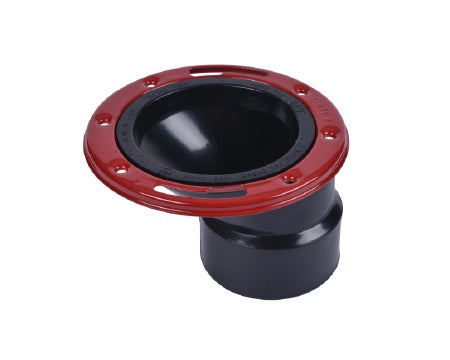
The Oatey® Level Fit Offset Closet Flange shifts the toilet's position about two inches to accommodate obstacles such as floor joists or misaligned drainpipes. Its 360-degree swivel ring allows precise bolt and screw alignment, while the metal ring provides added strength and crack resistance.
When to use an offset flange:
- Floor joists block standard installation
- Drainpipe is misaligned
- Toilet needs to be centered when waste pipe cannot be centered
- UPC and ASTM D2661 listed for code compliance
Wondering whether to use an offset flange? Read more here.
45-Degree Toilet Flanges: What Are They Used For?
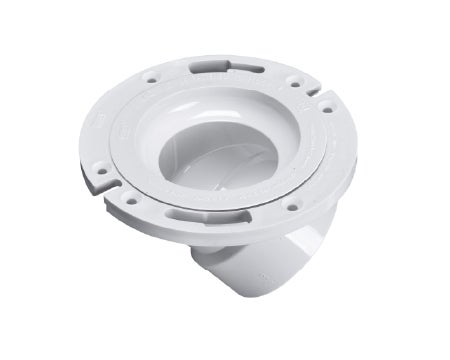
When clearance issues prevent a vertical installation, the Oatey® 45° Closet Flange provides the perfect solution. Available in both ABS and PVC, this flange directs the hub off the bottom at a 45-degree angle, allowing installation where obstructions exist beneath the toilet.
The flange solvent-welds over 3-inch or inside 4-inch Schedule 40 DWV pipe and features a no-restriction throat that complies with IAPMO IGC 67-2014el. The product comes with either a plastic or stainless steel ring: The plastic option offers corrosion resistance, while the stainless steel ring provides 360-degree swivel adjustability and superior strength.
Cast Iron Repair Flanges: How Do You Fix a Broken Cast Iron Flange?
For cast iron repairs, the Oatey® Twist-N-Set® Replacement Closet Flanges remains a top choice. This drop-in design expands inside the existing pipe, eliminating the need to remove the old flange.
Benefits of Twist-N-Set for cast iron repairs:
- No cutting or pipe removal required
- Expands to fit service weight, heavy weight, and no-hub pipe
- Ideal for remodels and slab construction projects
- Smooth, unrestricted flow design
- Installs without tools
Fast Set™ Spigot Fit Closet Flanges: When Is a Street Fitting Needed?
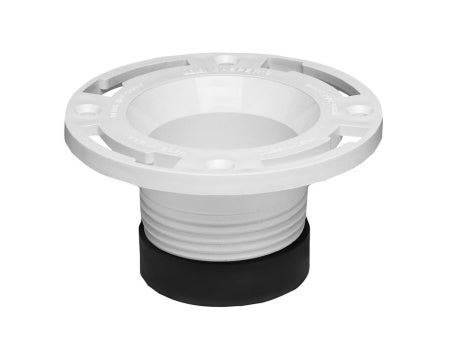
Fast Set™ Spigot Fit Closet Flanges, also known as street fittings, are designed for both PVC and ABS systems and can be cemented directly into the hub end of a fitting. These flanges are ideal when the waste pipe sits close to the finished floor and there isn't room to add additional pipe, such as near a 90-degree hub.
Each Fast Set flange includes eight countersunk holes and two toilet bolt slots for a secure floor connection. A Cleanbreak™ Test Cap minimizes the chance of the knockout falling through and shattering down the drainpipe.
Quick Reference: Toilet Flange Types Comparison
This table summarizes the different types of toilet flanges to help you choose the right one for your project:
| Flange Type | Best Use Case | Pipe Material | Key Features |
|---|---|---|---|
| Oatey® Level Fit Closet Flange | New install | PVC or ABS | Installs inside or over 3-inch or 4-inch pipe; rotating metal ring for precise bolt alignment; strong, watertight fit |
| Oatey® Cast Iron Closet Flanges | Repair or retrofit | Cast iron | Installs over 3-inch or 4-inch pipe without access below; includes test cap; no caulking needed; deep-set version available |
| Oatey® Brass Closet Flange Replacement Ring | Older lead connections | Lead/brass | Replaces corroded flange rings; installs easily into cast iron pipe; secure fit with countersunk screw holes |
| Oatey® Level Fit Offset Closet Flange | Tight spaces / obstacles | PVC or ABS | Shifts toilet ~2 inches; 360° swivel ring for alignment; metal or stainless ring adds strength |
| Oatey® 45-Degree Closet Flange | Obstruction clearance | PVC or ABS | 45° angled hub for limited clearance installs; solvent-welds to 3-inch or 4-inch pipe; available with plastic, metal, or stainless ring |
| Oatey® Twist-N-Set® Replacement Closet Flanges | Repairs | Cast iron | Drop-in design expands inside existing pipe; no cutting or tools required; smooth, unrestricted flow |
| Fast Set™ Spigot Fit Flange | Limited clearance hub | PVC or ABS | Street-fitting style cements into hub; includes eight countersunk holes and two bolt slots; test cap prevents knockout fall-through |
How Do You Repair a Broken Toilet Flange?
Oatey offers a variety of repair solutions that make it easy to fix or adjust toilet flanges without major plumbing work.
Replace a Broken Cast Iron or PVC/ABS Flange
For broken cast iron or plastic flanges, the Oatey® Twist-N-Set® Replacement Closet Flanges is a durable and convenient solution. Its expanding gasket design fits snugly inside heavyweight, service weight, or no-hub cast iron pipe, allowing for a secure seal without removing the existing flange.
The Twist-N-Set can also be used on PVC or ABS systems, making it versatile across different installations. This drop-in replacement is ideal for repairs in slab or basement applications where pipe access is limited, providing a long-lasting, watertight fix without the mess of caulking or solvent welding.
Quick Reference: Toilet Flange Repair Options
This table summarizes the different repair options available:
| Repair Type | Best Use Case | Pipe Material | Key Features |
|---|---|---|---|
| Oatey® Twist-N-Set® Replacement Closet Flanges | Replace broken or damaged flange | Cast iron, PVC, or ABS | Expanding gasket fits inside existing pipe; no pipe removal; drop-in design for quick repairs |
| Oatey® Fix-It® Repair Ring | Repair cracked or broken flange ring | All flange types | Installs over existing flange with four screws; universal fit for any floor type; no cement or special tools required |
| Oatey® Set-Rite® Toilet Flange Extension Kit | Adjust flange height to finished floor | PVC, ABS, cast iron, or stainless | Raises flange 1/4 inch to 1-5/8 inches; watertight seal; includes four stackable spacers, gasket, and screws for secure installation |
For step-by-step installation instructions, refer to Oatey's guide on How to Install a Toilet Flange. You'll also want to pair the flange with the right seal, such as a standard or extra-thick wax ring.
For additional installation tips, check out Five Best Practices When Installing a Toilet Flange.
Published on May 06, 2026
Frequently Asked Questions
-
What is a toilet flange?
-
A toilet flange (also called a closet flange) is a pipe fitting that connects a toilet to the home's drainage system. It's anchored to the subfloor with rust-resistant screws and works with a wax ring to create a watertight seal that prevents leaks, odors, and sewer gases from escaping.
-
-
What are the different types of toilet flanges?
-
The main types of toilet flanges include PVC flanges, ABS flanges, cast iron flanges, brass flanges, offset flanges, 45-degree flanges, and specialty repair flanges. Each type is designed for specific pipe materials and installation scenarios.
-
-
How do I know which toilet flange I need?
-
Choose your toilet flange based on three factors: (1) your pipe material (PVC, ABS, or cast iron), (2) your floor height and finished floor elevation, and (3) your application type (new install, repair, or specialty situation like tight spaces or obstructions).
-
-
Can I repair a broken toilet flange without replacing it?
-
Yes. The Oatey® Fix-It® Repair Ring can repair cracked or partially broken flanges without full replacement. For completely broken cast iron flanges, the Oatey® Twist-N-Set® Replacement Closet Flange offers a drop-in solution that doesn't require removing the old flange.
-
-
What is an offset toilet flange used for?
-
An offset toilet flange shifts the toilet's position about two inches to accommodate obstacles such as floor joists or misaligned drainpipes. The Oatey® Level Fit Offset Closet Flange helps keep the toilet centered even when the waste pipe cannot be centered.
-