
When planning a kitchen, laundry room or bathroom project, plumbing connections deserve attention alongside cabinets, appliances and finishes. Where will the shut-off valves go? Will they remain accessible? How will the connections look once the room is finished?
Plumbing supply boxes can help address these questions. They create an organized connection point for appliances and fixtures, with recessed options that keep valves and connections within the wall.
Here’s what homeowners should consider when deciding whether to include supply boxes in a renovation or new construction project.
What Is a Plumbing Supply Box?
A plumbing supply box, also called a plumbing outlet box, is an enclosure that houses water or gas shut-off valves and, in some applications, drain connections. The connections vary with the appliance or fixture being served.
For a complete comparison of applications and configurations, see Supply Boxes for Plumbing: Types, Uses and How to Choose the Right Box.
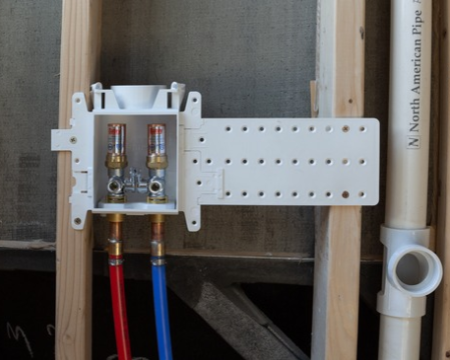
Four Benefits of Plumbing Supply Boxes
1. Access to Appliance Shut-Off Valves
A supply box provides a defined location for an appliance’s shut-off valves. This can make it easier to identify the appropriate connection when an appliance needs service or replacement.
Plan for access as well as appearance. Before finalizing the room layout, discuss how cabinets, appliances and trim will affect your ability to reach the valves.
2. Space Savings Around Appliances
Recessed boxes place connections within the wall rather than leaving the valves projecting into the room. This can help accommodate appliances in a more compact layout.
A recessed box does not eliminate the appliance’s clearance requirements. Leave room for hoses, connections and servicing according to the appliance manufacturer’s instructions. Discuss the complete installation with your plumber before setting cabinet depths or ordering an appliance.
3. A Cleaner Finished Appearance
Supply boxes help organize exposed plumbing connections and create a more deliberate finished appearance. Faceplates frame the wall opening, making the connection point look like a planned part of the room.
This can be particularly useful where plumbing remains visible. Consider the view into a laundry room, beneath an open vanity or beside a toilet when discussing box placement.
4. Installation Efficiency and Potential Labor Savings
Certain supply-box configurations allow valves to be installed during rough-in, potentially reducing later valve-installation work. Whether this produces labor savings depends on the product and project.
Ask your plumber to compare the proposed installation with a conventional approach. Consider the complete scope—including wall access and finishing—rather than assuming that every supply box will reduce the overall project cost.
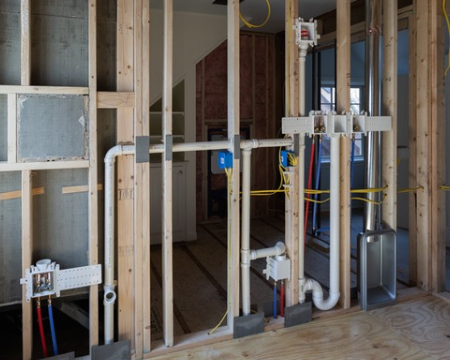
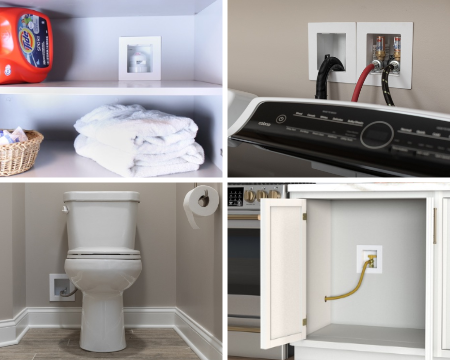
Where Might Supply Boxes Fit in Your Home?
Start with the appliance or fixture, then consider how its connections fit into the room.
Laundry Rooms
Washing-machine boxes organize hot and cold water connections and the washer’s drain connection. For homeowners, the planning questions include where those connections will sit and how they will be accessed after the washer is in place.
Once you are ready to compare laundry-specific products, read How to Choose a Washing Machine Outlet Box.
Kitchens
Dedicated supply boxes are available for applications such as refrigerator ice makers, dishwashers and kitchen sinks. These applications have different connection needs, so the box should match the appliance or fixture.
Coordinate the plumbing layout with cabinetry and appliance specifications before construction begins. Identify which connections will be concealed and how they will remain accessible.
Bathrooms
Toilet and lavatory supply boxes provide options for organizing water connections in bathrooms. Their visual effect may matter most where the plumbing is exposed rather than enclosed within a vanity.
Discuss box and trim placement alongside the fixture layout so the finished result works both practically and visually.
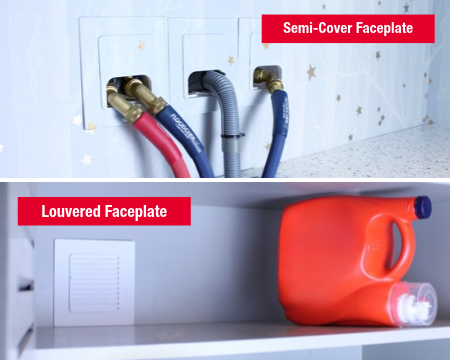
Finishing Options: Making Connections Part of the Design
The visible faceplate is worth considering before the room’s finishes are complete. Think about whether the connection point should blend into the wall or remain clearly identifiable.
Oatey’s MODA® system includes partial, full and louvered faceplate inserts. The appropriate choice depends on the box and application; appearance alone should not determine which insert is used.
MODA also offers modular configurations for different layouts. Your plumber can evaluate whether that flexibility would be useful for the framing and connections in your project.
When Should You Plan for a Supply Box?
Discuss supply boxes before plumbing rough-in and wall finishing. Adding a recessed box to an existing finished room can involve opening and repairing the wall, so it is helpful to consider the option while planning related work.
Bring these questions to your contractor or plumber:
- Which appliances or fixtures could use a supply box?
- Where will the box sit relative to cabinets, appliances and finished surfaces?
- How will the shut-off valves remain accessible?
- Which faceplate or insert suits the application?
- What work is included in the installation estimate?
You do not need to select every component yourself. Establish the room’s practical and visual goals, then have your plumber confirm the appropriate products and installation requirements.
For detailed installation guidance, see our How to Install a Supply Box project guide.
Plan for the Connections You’ll Use Later
A finished room should work well beyond installation day. Considering supply boxes during project planning gives you an opportunity to address connection placement, valve access and appearance together.
For a more detailed comparison of supply box materials and configurations, see Supply Boxes for Plumbing: Types, Uses and How to Choose the Right Box.
Published on November 13, 2026
Frequently Asked Questions
-
What does a plumbing supply box do?
-
A plumbing supply box organizes water supply lines and sometimes drainage for appliances, keeping them accessible, protected, and neatly recessed inside the wall.
-
-
Where should supply boxes be installed in my home?
-
Common locations include behind washing machines, refrigerators with ice makers, dishwashers, sinks, gas appliances, and toilets.
-
-
Are plumbing supply boxes required by code?
-
Code requirements vary by location and application. While a supply box itself may not always be specifically required, shut-off valves and drain connections often must remain accessible and properly installed. A licensed plumber can confirm local requirements.
-
-
Can homeowners install supply boxes themselves?
-
Some experienced DIYers may be able to install certain supply boxes, especially during open-wall renovations. However, because supply box installation often involves in-wall plumbing, gas connections, or code-specific requirements, most homeowners should work with a licensed plumber.
-
-
Are supply boxes and outlet boxes the same thing?
-
In plumbing, supply boxes are sometimes called outlet boxes or plumbing outlet boxes. They are different from electrical outlet boxes, which are used for wiring.
-